
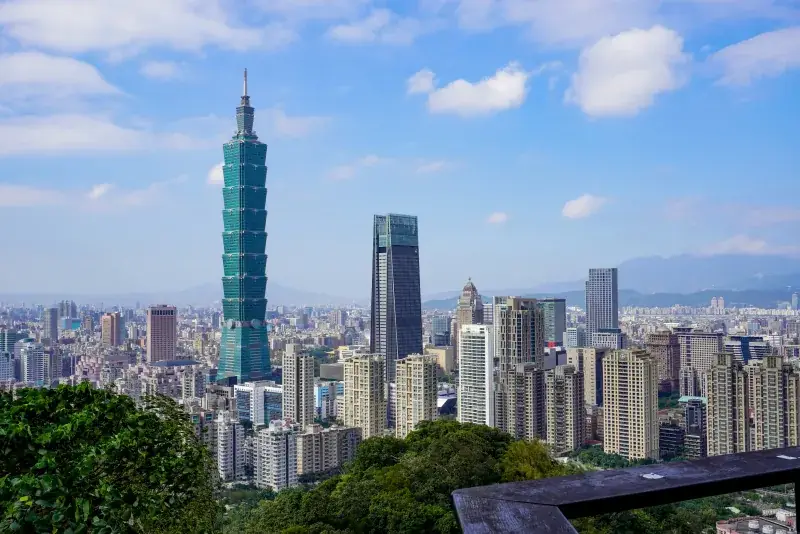
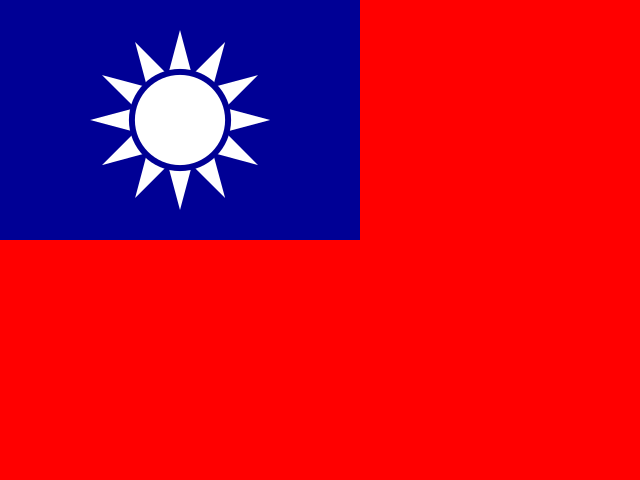
Taipei fills an ancient lakebed basin ringed by green volcanic peaks, threaded by the Tamsui River — a capital where incense-filled 18th-century temples sit a short metro ride from a 508-meter skyscraper. Shaped by Qing-era tea traders, fifty years of Japanese rule, and the Republic of China's arrival in 1949, Taiwan's capital is a city of layered stories — and the best way to hear them is with a self-guided audio tour in your ears as you wander from temple courtyard to night-market alley at your own pace.
Temples, memorials and imperial treasures
Start in Wanhua, the city's oldest quarter, where Lungshan Temple has drawn worshippers since 1738. Bombed in the Second World War, it was rebuilt around the Guanyin statue that famously survived the destruction of the main hall — one of the stories its audio guide brings to life amid the smoke and chanting. Across town, the white marble and blue-tiled roof of Chiang Kai-shek Memorial Hall anchors Liberty Square between the National Theater and Concert Hall, with an hourly changing of the guard. And in the hills to the north, the National Palace Museum holds roughly 700,000 objects of jade, bronze, calligraphy and imperial porcelain — with narration to guide you to icons like the Jadeite Cabbage.
Lungshan Temple
Historic Buddhist and Taoist temple whose golden Guanyin statue survived a direct WWII bombing untouched.
Chiang Kai-shek Memorial Hall
Marble memorial with eighty-nine step staircases and a giant bronze statue, its gates renamed twice amid political battles.
National Palace Museum
Vast imperial art collection housed in a museum, famed for a jadeite cabbage saved from decades of war.
Night markets and creative quarters
After dark, Taipei becomes one of Asia's great street-food cities. Raohe Night Market packs snacks, stalls and crowds into a single lantern-lit street, while Ningxia Night Market in Datong — famed for oyster omelets and fried chicken — sits beside the old tea-trading shophouses of Dadaocheng. By day, explore the city's repurposed industrial spaces: a 1914 wine factory reborn as Huashan 1914 Creative Park, and a former tobacco plant now home to designers and galleries at Songshan.
Night markets only truly come alive after 6pm — arrive hungry and graze your way down the row.
Raohe Night Market
Riverside street market of food stalls and vendors beside a centuries-old Mazu temple, alive after dark.
Ningxia Night Market
Narrow lane of family-run food stalls, some serving the same recipes for over sixty years, in a historic riverside district.
Huashan 1914 Creative Park
Red-brick former sake distillery turned gallery and concert complex behind a landmark smokestack.
Songshan Cultural and Creative Park
Former tobacco factory village of dormitories, a nursery and bathhouses, now creative studios and galleries.
Green escapes and easy day trips
When the city hums too loudly, locals retreat to the banyan shade of Daan Forest Park, ride the gondola from Taipei Zoo up to Maokong's hillside teahouses, or soak in Beitou's sulfur hot springs. An hour northeast, a classic day circuit links the lantern-lit lanes of Jiufen Old Street, sky lanterns rising over Shifen Old Street, and the surreal mushroom rocks of Yehliu Geopark — each stop with its own audio story, so the landscape's history travels with you.
Daan Forest Park
Ponds and lawns covering a demolished shantytown, guarded by a once-contested Guanyin statue.
Taipei Zoo
Sprawling hillside zoo of over four hundred species, from pandas to a beloved wartime elephant's legacy.
Jiufen Old Street
Hillside old street of stone stairways, red lanterns and teahouses built on a nineteenth-century gold rush.
Shifen Old Street
Railway village street where shops line live tracks and sky lanterns rise with written wishes.
Yehliu Geopark
Wind-carved seaside hoodoo park of mushroom rocks on a cape jutting into the Pacific.