
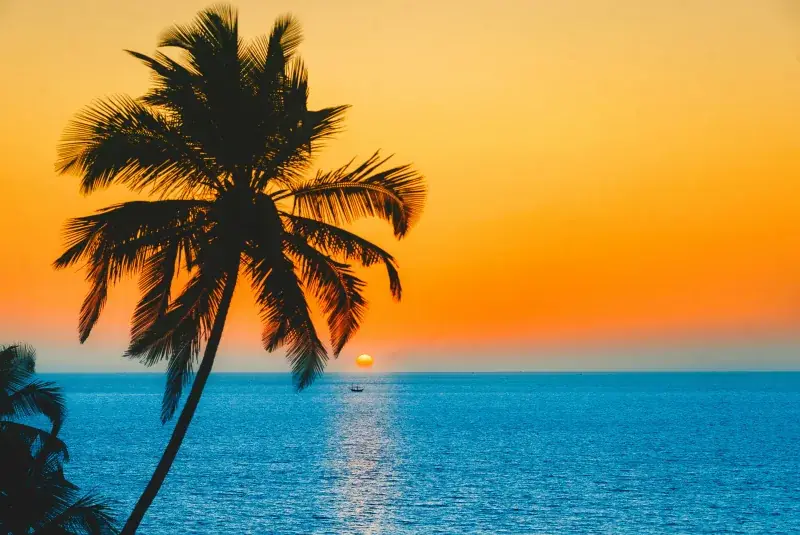

India's smallest state, and its most singular
Goa is a sliver of coast on the Arabian Sea where four and a half centuries of Portuguese rule (1510–1961) fused with Konkani India to produce something found nowhere else: whitewashed Baroque churches rising out of the palms, red-laterite forts guarding river mouths, and fish-curry-rice lunches taken at the unhurried local pace known as susegad. It is a place best explored at your own rhythm — which is exactly how self-guided audio tours work here: pick a landmark, press play, and hear its story while you stand in front of it.
Old Goa and Panaji: the Rome of the East
Begin in Old Goa, the abandoned Portuguese capital whose churches and convents form a UNESCO World Heritage Site. The Basilica of Bom Jesus, raised in unplastered red laterite between 1594 and 1605, holds the relics of St Francis Xavier in a silver casket — its audio guide tells how the "Apostle of the Indies" became Goa's patron saint. Nearby stands the Sé Cathedral, the largest church the Portuguese built in Asia and nearly eighty years in the making; its famous Golden Bell still rings from the one tower that survived after its twin collapsed in 1776. Downriver in Panaji, the zigzag staircase of Our Lady of the Immaculate Conception presides over a capital of cobbled lanes, ochre-and-indigo Latin Quarter houses, and wrought-iron balconies.
Basilica of Bom Jesus
Baroque basilica of black granite and laterite, holding the incorrupt body of a Jesuit missionary in a silver casket.
Se Cathedral
Portuguese-era cathedral with a lopsided facade, one bell tower lost since seventeen seventy-six.
Our Lady of the Immaculate Conception Church Panaji Goa
Hilltop Baroque church founded as a mariners' chapel, crowned by a whitewashed zigzag staircase and Goa's second-largest bell.
Forts, beaches, and a waterfall in the Ghats
North Goa is the lively coast: Baga, Calangute, and Candolim beaches run in one long golden arc below the 17th-century bastions of Fort Aguada, while the ramparts of Chapora Fort deliver the coast's finest sunset panorama — each stop carrying an audio story of pirates, Marathas, and Portuguese garrisons. South Goa answers with the quiet crescent of Palolem Beach. Inland, the Western Ghats hide Dudhsagar Falls, a roughly 600-metre "sea of milk" cascading down the forested mountainside, and Hindu Goa thrives at the serene Shree Mangesh temple. On market days, join half the state at Mapusa's stalls for spices, chouriço sausages, and cashew feni.
Fort Aguada
Seventeenth-century coastal fortress whose cells once held Goa's freedom fighters under Portuguese rule.
Chapora Fort
Laterite hilltop ruin above a river mouth, rebuilt by the Portuguese as a border fort against Maratha raids.
Baga Beach
Fishing-village beach where creek catches turn into grilled seafood at shoreline shacks.
Calangute Beach
Wide sandy stretch of coast where fishing boats double as sunrise dolphin-watching craft.
Palolem Beach
Crescent of pale sand where a headphone dance party fills the night without a loudspeaker.
Dudhsagar Falls
Four-tiered cascade dropping over three hundred meters down black rock, milky white with monsoon runoff.
When to go
Mid-November to mid-February brings dry, sunny days ideal for walking ramparts and beaches alike. Come for the sand, stay for the stories — with an audio guide in your ear, every church façade and crumbling bastion has one to tell.